
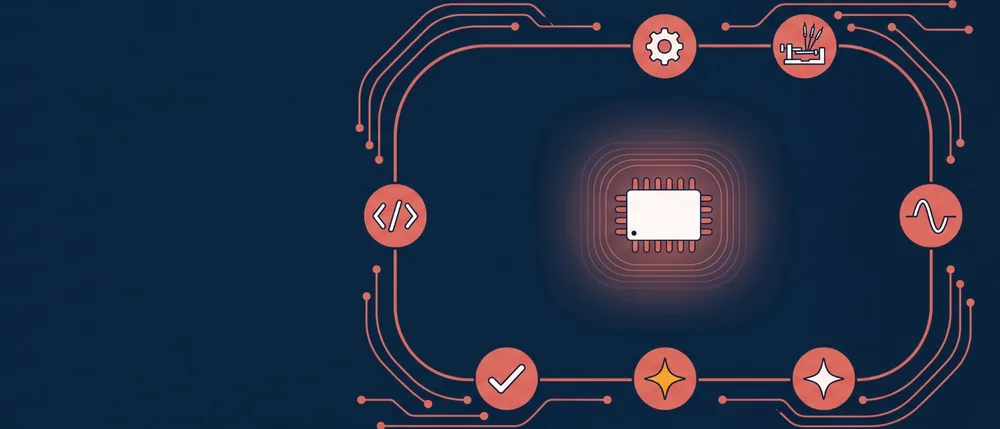
- 01Commit
- 02Build & analysis
- 03HIL bench
- 04Measurements
- 05AI analysis
- 06Validated fix
Every commit comes back with a measurement, not an opinion.
Six steps run one after the other with no manual intervention. AI proposes, our engineers review and validate every fix.
When testing by hand is no longer enough.
Your firmware regresses from one release to the next
A fix breaks a feature that used to work. The pipeline replays every test on the board at each change: the defect shows up with the change that introduced it.
Your board tests are manual
Flashing, wiring, measuring, writing down: these steps take engineering time and are never repeated in exactly the same way. The bench runs them alone, the same way every time.
You are preparing your RED or CRA compliance
These texts ask you to trace the components of the firmware and to deliver security updates. The pipeline produces these items at every release.
What happens between a commit and a fix.
Commit
Every change to the code starts the pipeline, with no manual action.
Build & analysis
The firmware is built in a frozen environment, then goes through static analysis. The same code always gives the same binary.
HIL bench
The binary is loaded on your real board. The bench simulates what surrounds it: sensors, interfaces, network.
Measurements
The bench records how the board behaves, for example radio and power consumption, and compares it with earlier releases.
AI analysis
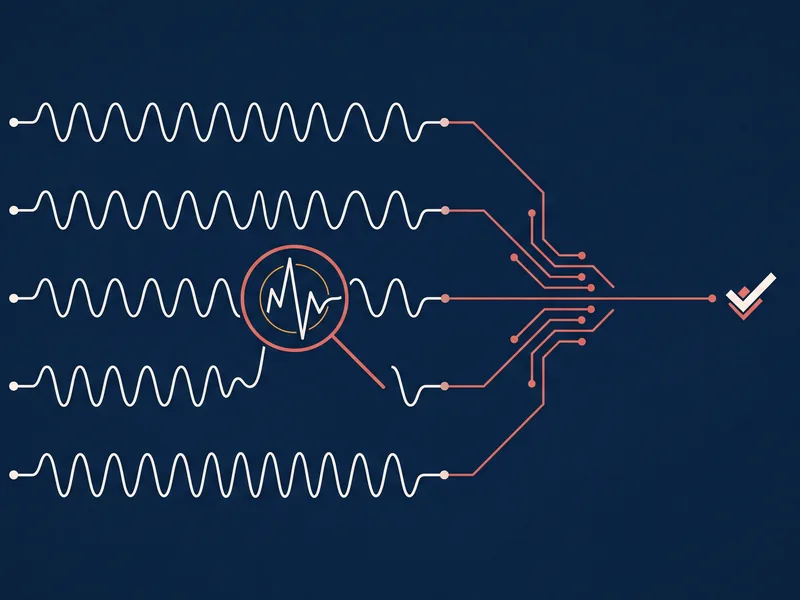
The AI sorts the logs, spots the regressions and prepares a fix with the tests that check it.
Validated fix
A Picodev engineer reviews the fix. Once validated, it goes back into the loop like any other change.
Three building blocks, one pipeline.
Software factory
Firmware CI/CD, reproducible builds, static analysis, signed OTA pipeline, SBOM.
Automated benches
CI-driven HIL benches, radio and power consumption measurements, production benches.
Continuous improvement
Test generation, log triage, regression detection, fixes reviewed by our engineers.
The software pipeline
It plugs into your forge, for example GitHub Actions. It builds reproducibly, analyses the code, signs the OTA updates and keeps the inventory of components (SBOM) up to date. We set it up on the targets we work with, such as Zephyr, FreeRTOS, STM32, ESP32 or nRF, with MCUboot for the updates.
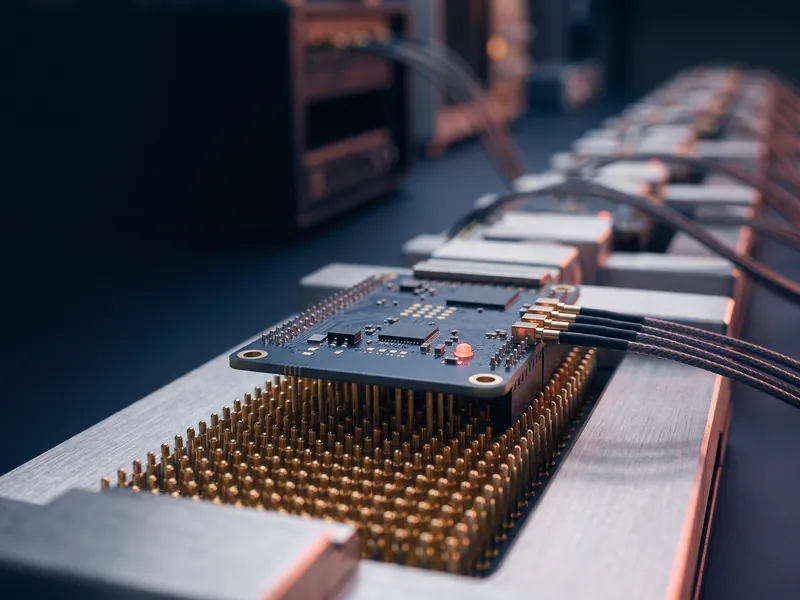
A bench designed for your product
Every bench is custom-designed. Depending on the product and the budget, it ranges from an interface simulator to a full bench with its measuring equipment. We choose with you the level that makes sense for your product.
An AI chosen with you
The models can be those of a provider or run locally. Locally, suitable hardware is needed for them to stay effective. In both cases, an engineer reviews every fix.
Evidence with every release.
Every delivered release comes with what you need to trace it.
- 01
Release report
What changed, what was tested on the bench, and the result of each test.
- 02
SBOM
The inventory of your firmware's software components, kept up to date with every build.
- 03
RED / CRA evidence
The test and update records useful for your compliance file.
An audit first, the pipeline next.
Audit
We take stock of your test pipeline and of what can be automated.
Design
We define the pipeline and the bench that suit your product and your budget.
Set-up
The pipeline runs on a new firmware designed for it, or on your existing firmware, which we take over.
Handover
You receive the technical documentation of the bench. You can buy the bench and take the pipeline back in-house.
Before you trust us with your firmware.
Where do we start?
With an audit. It takes stock of your test pipeline and of what can be automated.
Does the pipeline work on an existing firmware?
Yes. It is meant for new firmware, designed with it in mind, and it also lets us take over an existing firmware quickly.
What does a bench look like?
Every bench is custom-designed for the product. Some are just an interface simulator, others include whole pieces of equipment. It depends on the budget and on what is relevant for the product.
Where do the benches run?
During development, the benches run at Picodev. You can access them over VPN, on request. They can then be delivered to you.
Who owns the bench?
You can buy the hardware bench. In every case, you receive the technical documentation needed to reproduce it.
Can I take the pipeline back in-house?
Yes. Your team can take the pipeline over in-house.
What role does AI play?
AI generates tests, sorts logs and detects regressions. It prepares the fixes; they are always reviewed by our engineers before being validated.
Is my source code sent to a third party?
You decide. The models can be those of a provider or run locally; locally, suitable hardware is needed for them to stay effective.
What gain can I expect?
The gain is twofold: the time your engineers no longer spend testing by hand, and the defects found before delivery rather than at your customers. The audit is there to estimate it for your product.
Let's start with an audit of your test pipeline.
Fill in our project form or write to us.